What integrated fire protection measures are in place?
Fire prevention measures aim to eliminate potential fire hazards from the outset. These include, for example, the use of certain materials, the spatial separation of different sources of danger, or the use of special detection methods that identify an impending fire early enough to prevent it.
Even though the detection methods used in integrated fire protection do not differ fundamentally from conventional methods, they must still be selected with care and designed in accordance with the protection objectives. In most cases, smoke, heat or both are used as trigger criteria.
If a fire is detected, it must be reliably extinguished. Various methods can be used for this purpose. When choosing the extinguishing method, the following factors must be taken into account: consequential damage caused by extinguishing, trigger mechanism, maintenance and servicing, and the requirements for integration.
What trigger mechanisms are available?
Thermal release
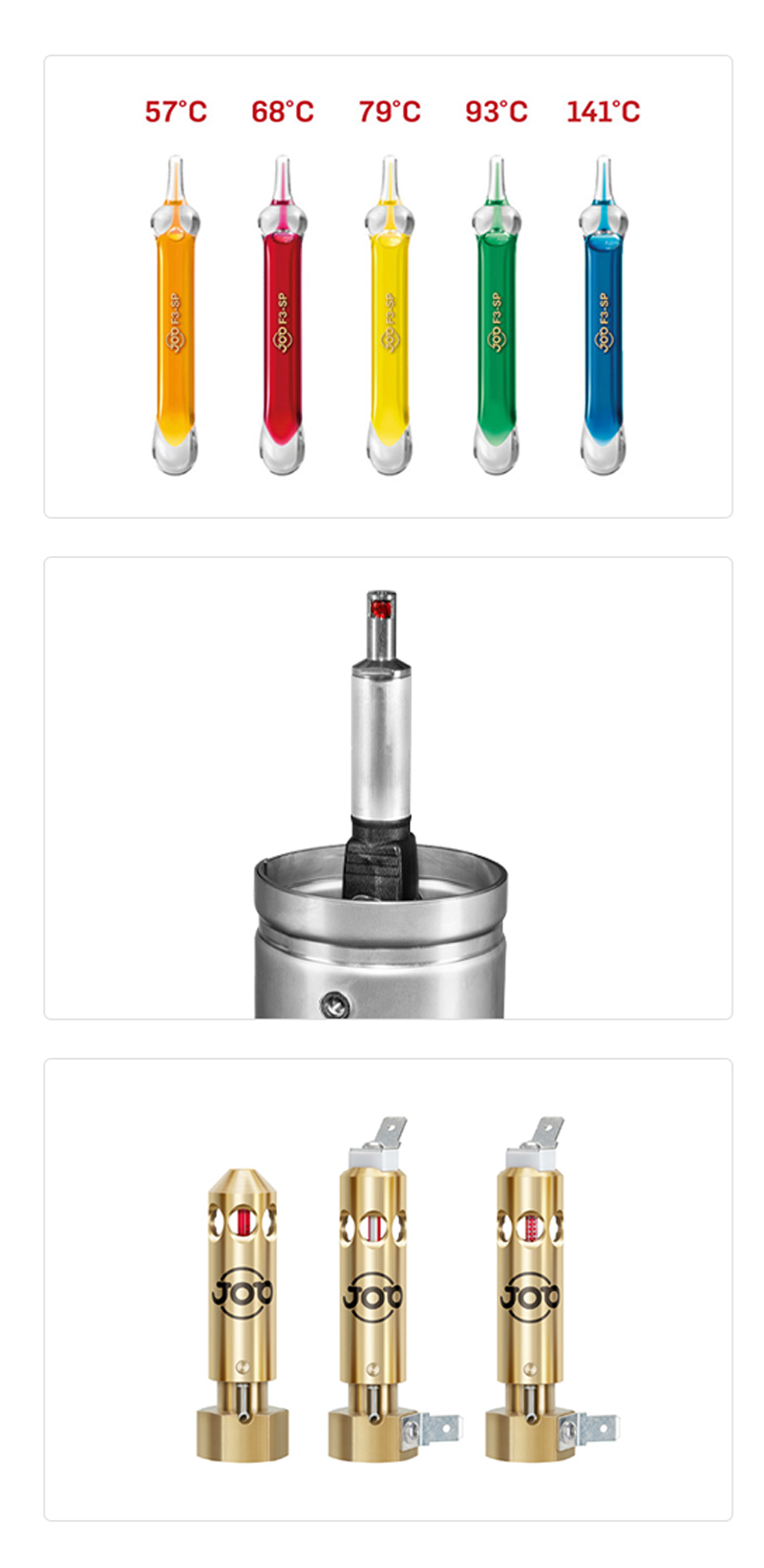
When thermal triggers are used, it must be defined in advance what temperatures are to be expected in the device and at what temperatures a trigger should be activated. Sprinkler glass ampoules, which burst when a certain temperature is reached, or eutectic elements, which deform at a certain melting point, are usually used.
Advantages of thermal release
- Independent of power supply: Automatic thermal triggers operate without an external power source, providing 24/7 protection.
- Cost-effective: No additional devices are required for evaluation and control, making thermal triggers the most economical solution in most cases.
- Additional function as NC contact: Some models allow the trigger to be evaluated for further safety measures.
Disadvantages of thermal trigger
- Delayed response: Critical activation temperatures are only reached once a fire has already started, resulting in delayed firefighting.
- Higher risk of damage: Due to the delayed activation, damage caused by fire, pollution and fire by-products can be significantly greater than with early detection methods such as smoke detectors.
Electrical release
Electrical activation of extinguishing systems usually means that any common detection method can be used, as an extinguishing control centre is employed. In many cases, optical smoke detectors are the method of choice, as they enable early fire detection in the initial stages of a fire and are comparatively inexpensive.
The use of fire control centres offers further possibilities, e.g. detector dependencies, pre-alarms, control/connection to other systems and trigger delays. This is particularly relevant in complex environments, such as production facilities. One disadvantage compared to thermal triggering is the usually higher initial investment, as more complex systems are used.
Special case: lithium-ion batteries
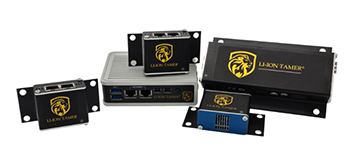
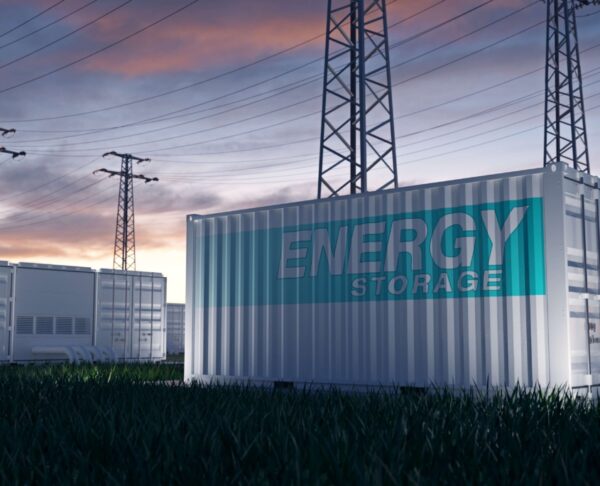
If devices containing a high proportion of lithium-ion batteries are used, special detection methods should be employed. Fire incidents involving lithium-ion batteries differ significantly from conventional electrical fires and require special measures.
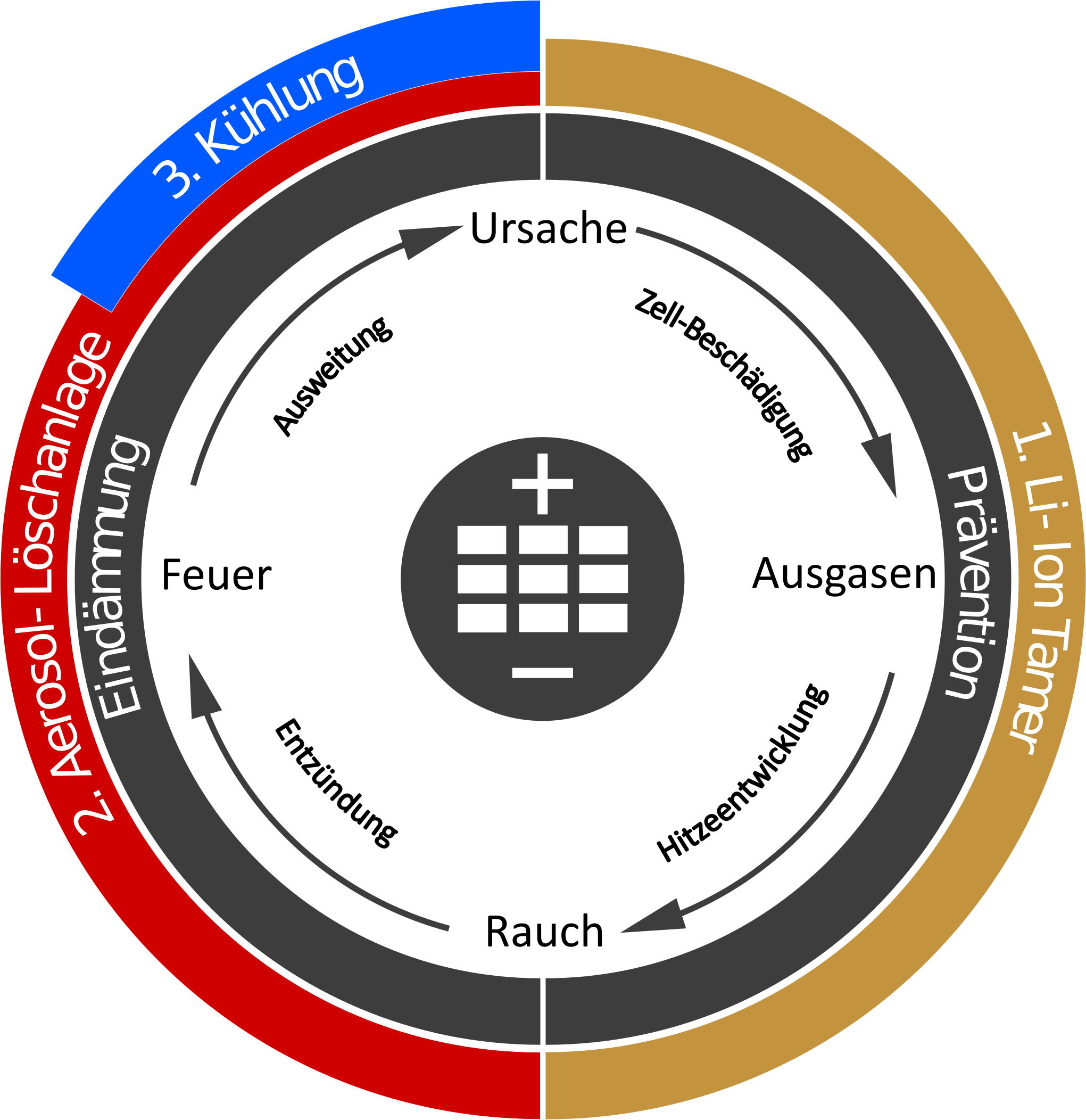
Which extinguishing agent is suitable for integrated firefighting?
Only extinguishing agents that do not damage the often sensitive equipment in the device or control cabinet can be used. Water, powder or foam are therefore naturally ruled out. Gases and aerosols are suitable.
Gas
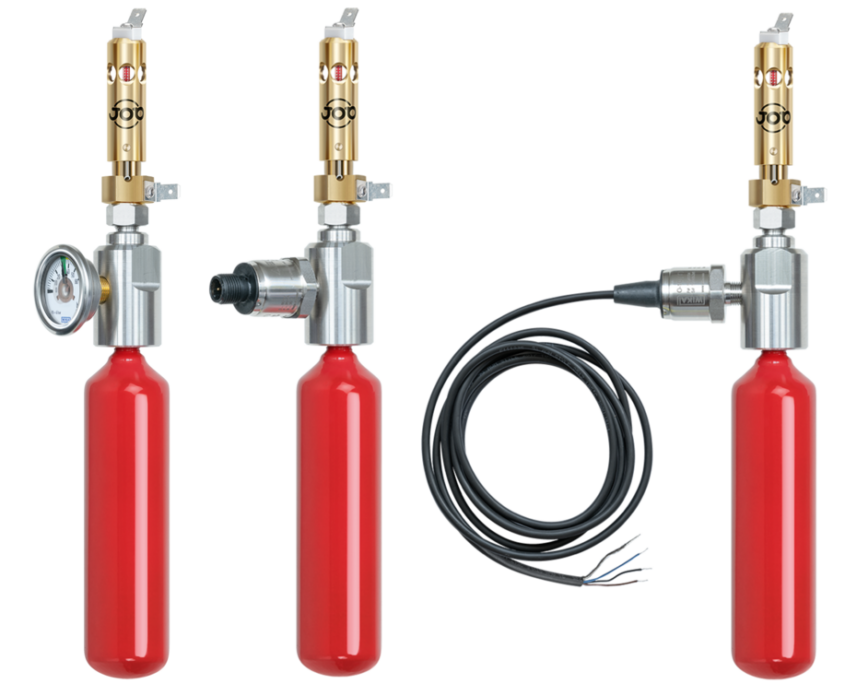
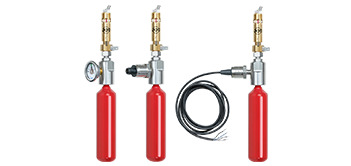
One gas extinguishing system that is suitable for use in appliances is AMFE. This system uses the FK5-1-12 extinguishing agent known as Novec1230. It leaves no residue, is not electrically conductive and is non-corrosive. The recommended minimum retention time of 10 minutes for the extinguishing agent is negligible for smaller devices and enclosures, provided that the system is shut down.
Aerosol
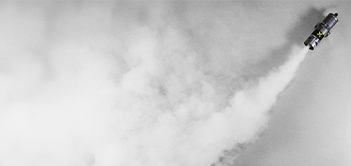
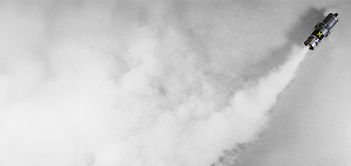
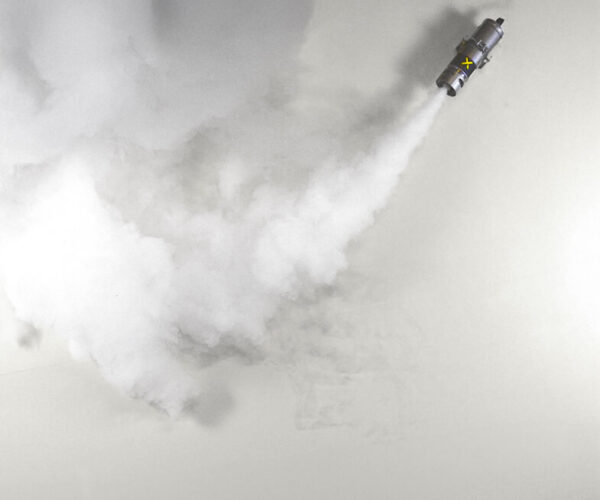
Aerosol extinguishing systems use a mixture of suspended particles and carrier gases as extinguishing agents, which combat fire at a chemical level. Aerosol extinguishing agents are also non-conductive and non-corrosive. The most effective aerosol extinguishing systems require less than a tenth of the extinguishing agent compared to Novec1230 (mass to extinguishable space volume). The minimal amounts of extinguishing agent result in barely noticeable extinguishing residues that are easy to clean and leave no damage.
One gas extinguishing system that is suitable for use in appliances is AMFE. This system uses the FK5-1-12 extinguishing agent known as Novec1230. It leaves no residue, is not electrically conductive and is non-corrosive. The recommended minimum retention time of 10 minutes for the extinguishing agent is negligible for smaller devices and enclosures, provided that the system is shut down.
Aerosol extinguishing systems use a mixture of suspended particles and carrier gases as extinguishing agents, which combat fire at a chemical level. Aerosol extinguishing agents are also non-conductive and non-corrosive. The most effective aerosol extinguishing systems require less than a tenth of the extinguishing agent compared to Novec1230 (mass to extinguishable space volume). The minimal amounts of extinguishing agent result in barely noticeable extinguishing residues that are easy to clean and leave no damage.