What are the fire risks associated with battery storage systems?

Thermal instabilit
Lithium-ion batteries are sensitive to overheating. If a certain temperature, which depends on the cell chemistry, is exceeded, thermal runaway can quickly occur, whereby the heat build-up spreads to the surrounding cells, increases exponentially and can ultimately lead to a fire.

hort circuit
A short circuit within the battery can also cause a sudden rise in temperature, triggering the chain reaction of thermal runaway. Short circuits can occur due to manufacturing defects, mechanical damage or deteriorating cell chemistry.

Overloading & Overdischargin
If a lithium-ion battery is overcharged or over-discharged, this can lead to structural changes within the battery cells. This can damage the cell infrastructure and increase the risk of fire.

oreign particles
Foreign particles can cause short circuits and damage. These foreign particles may originate from the production process, improper handling or wear and tear over time.
What are the requirements for fire suppression systems for battery storage facilities?
Extinguishing methods based on smothering the fire are not very effective, as oxygen is produced during cathode consumption in the battery cell, which means that the fire continues to burn even without ambient air. The primary extinguishing effect should therefore not be based on oxygen deprivation or smothering.
Cooling is generally very effective in slowing down or stopping exothermic chemical reactions. However, the cooling effect must be maintained over a longer period of time (often several hours), which is why extinguishing gases are not very suitable. Water, e.g. in the form of water mist, sometimes has the best cooling effect, but it further damages the plant, is electrically conductive and becomes heavily contaminated during the extinguishing process, which is why appropriate environmental protection measures must be planned. The contaminated extinguishing water must not be allowed to enter the groundwater.
Lithium-ion fires quickly reach temperatures above 1000°C. Not all extinguishing agents are suitable for such temperatures. Fluorinated synthetic extinguishing agents (e.g. Novec 1230 / FK5-1-12) decompose above 600°C and form extremely toxic HF acid.
In battery storage facilities, even after a supposed extinguishing, there is always the risk that there are still battery cells that are already in a temperature range in which the chemical reaction intensifies – to the point of reignition. The effect of the fire suppression system must therefore last for a longer period of time or, ideally, be adaptable to the respective circumstances.
The gases produced during the decomposition of the electrolyte in a lithium-ion battery are highly flammable and burn explosively. Ideally, the electrolyte vapours released are neutralised by the extinguishing agent and bound into stable molecules.
AF-X aerosol fire suppression systems for battery storage facilities
The solution
Aerosol fire suppression systems have proven themselves many times over as an effective system for containing thermal runaways. The aerosol creates an atmosphere in the room for a prolonged period of time in which no flames or fires can develop. This prevents an uncontrolled rise in temperature and effectively prevents the fire from spreading to surrounding battery modules or infrastructure.
How do AF-X aerosol fire suppression systems work?
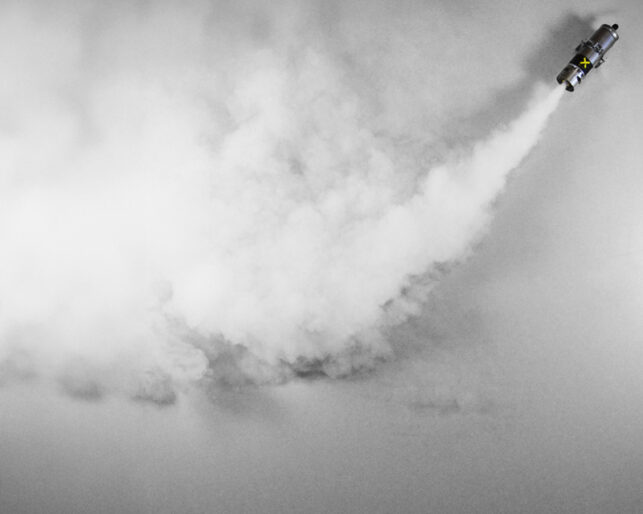
AF-X aerosol fire suppression systems suppress fires by interrupting the chemical chain reaction of the fire. To do this, they generate an extinguishing agent from solid potassium carbonate particles suspended in a carrier gas. The aerosol extinguishing agent binds the free radicals in the flame and prevents them from reacting with atmospheric oxygen. This produces stable products that continue to react and form the original extinguishing agent again. The extinguishing agent is therefore not consumed and remains effective in the room for a long time. The AF-X extinguishing agent is certified for a market-leading 90-minute effective retention time.
How do AF-X aerosol fire suppression systems work in battery storage facilities?
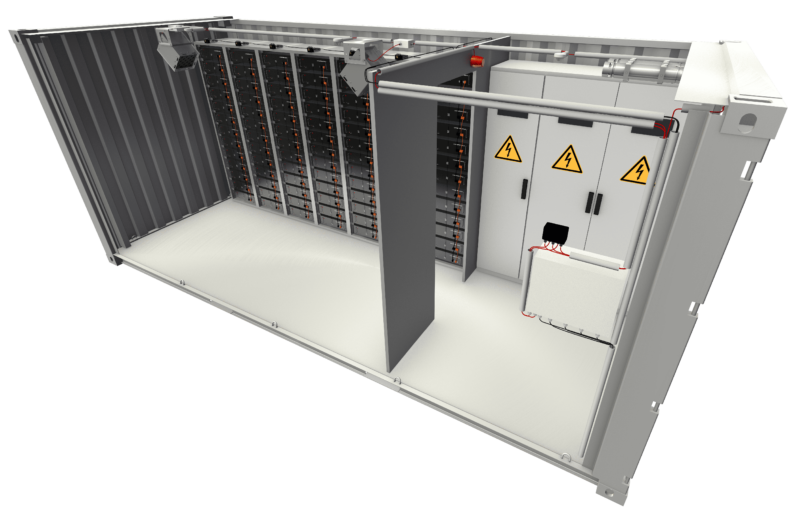
Installation of AF-X aerosol fire suppression systems for battery storage facilities
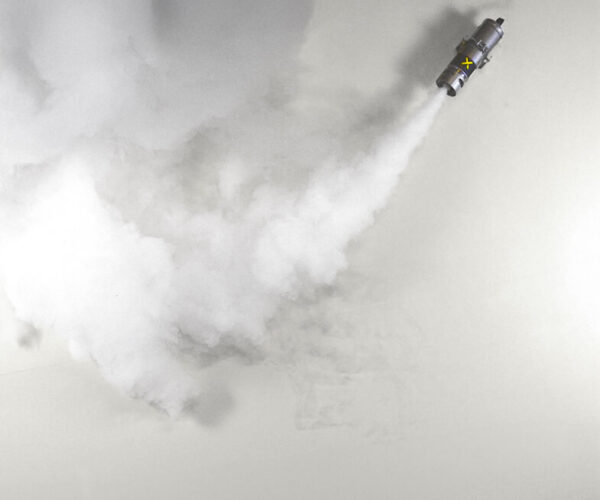
Aerosol extinguishing generator