An introduction to aerosol fire suppression technology
Aerosol fire suppression systems were originally developed in response to the Montreal Protocol, which came into effect on the 1st of January 1989, and the associated ban on halon fire extinguishing agents. A replacement for halon (halomethane) was called for: a fire-extinguishing agent that combats fire at a chemical level, is environmentally friendly, has no or only a low ozone-depleting potential (ODP), is non-toxic to humans and does not damage equipment.
Aerosol fire suppression systems achieve this by producing a highly effective and technologically advanced extinguishing agent with unique operational and functional characteristics. They thus combine an environmentally friendly and non-hazardous extinguishing agent with highly effective fire-suppression properties.
The result is fire suppression in its early stages, reduced damage to machinery, equipment and buildings, significantly shorter production downtime, and cost-effectiveness in preventive fire protection.
Definition
A condensed aerosol is defined as an extinguishing agent consisting of finely dispersed solid particles and gaseous substances produced during the combustion of a fixed substance. The US National Fire Protection Association (NFPA) defines condensed aerosols as suspended particles with a diameter of less than 10 micrometres. Due to the small particle size, large reaction surfaces are created, which are crucial to the effectiveness of the extinguishing agent.
Aerosol extinguishing technology has its origins in the aerospace industry. There is no place where maximum reliability and efficiency are more important than in space. The answer to these specific challenges was found in condensed potassium carbonate, suspended in a gaseous mixture – the first aerosol extinguishing agents were born.
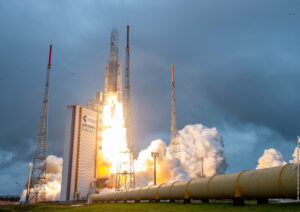
Just like the solid rocket booster of the Ariane 5 rocket, the extinguishing agent is produced and installed as a solid chemical. It is only upon activation that the aerosol is generated as the actual extinguishing agent. Production standards and the purity of the ingredients directly determine the composition and effectiveness of the extinguishing agent.
How do aerosol fire suppression systems work?
For a fire to start, the correct proportions of oxygen, combustible material and thermal energy are required. Most fire suppression methods aim either to deprive the fire of oxygen or to lower the temperature to a level below which the combustion reaction cannot be sustained.
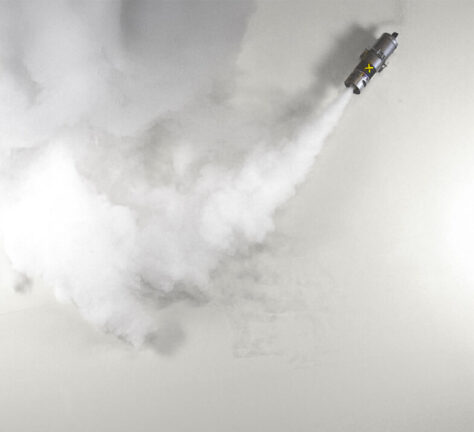
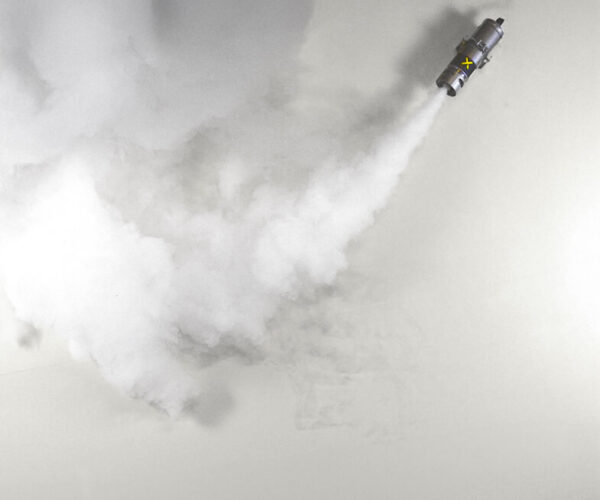
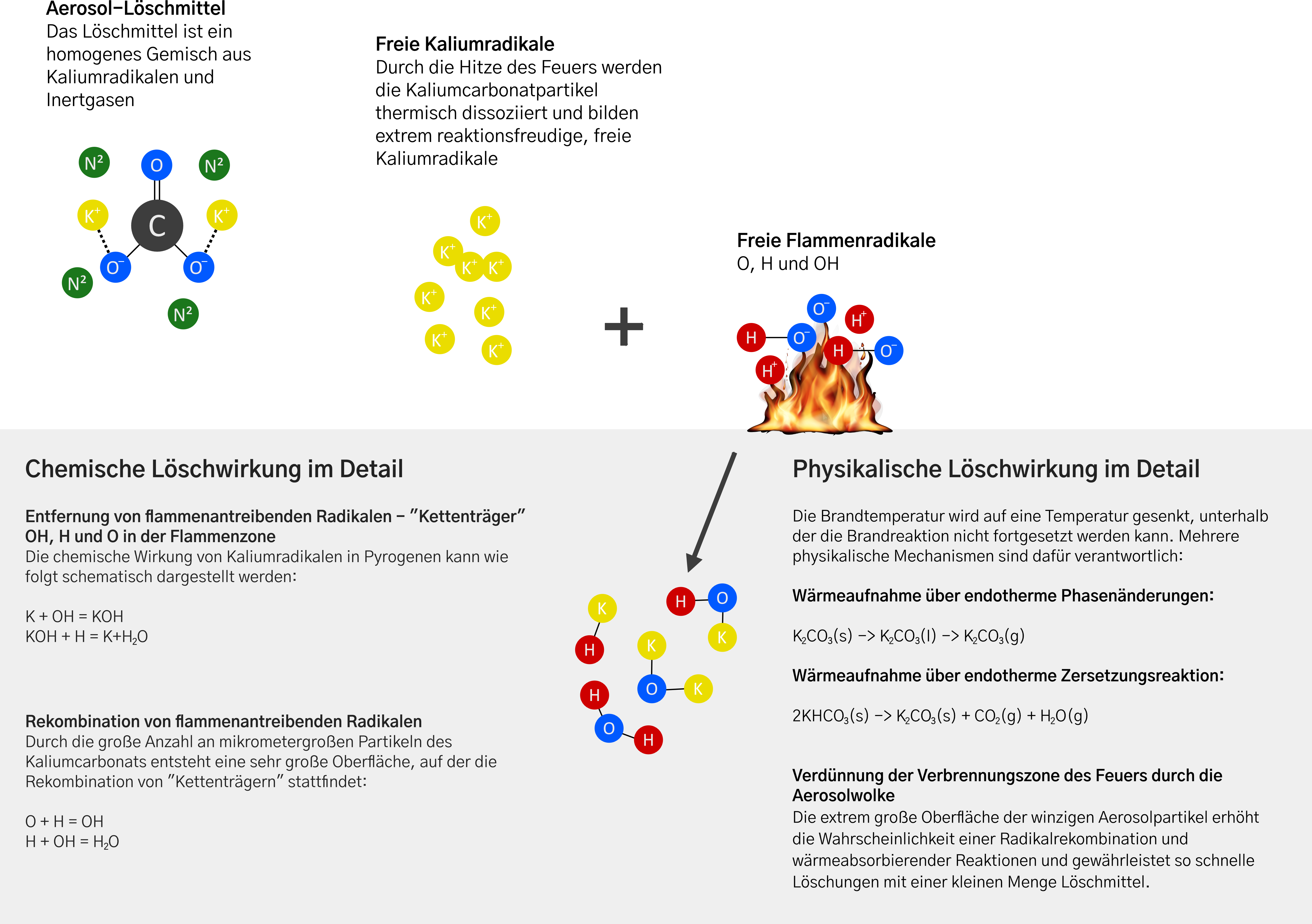
The primary extinguishing effect of aerosol extinguishing systems is based on interrupting the chain reaction of combustion, rather than on oxygen displacement. The extinguishing agent disperses like a gas, but without toxic properties or oxygen displacement. The agent is neither stored nor released under pressure.
Are all aerosol extinguishing systems the same?
The basic extinguishing principle – interrupting the chain reaction of combustion – is the same for all aerosol extinguishing systems. Differences lie primarily in the formulation of the solid material in the generator and the manufacturing quality of the generators.
The differences in formulation are particularly evident in the particle size and thus the reaction surface area, which determines the extinguishing agent’s efficiency. Also, the composition and quantity of the gases released upon activation are key factors. The purer the solid, the more efficient and less toxic the extinguishing agent.
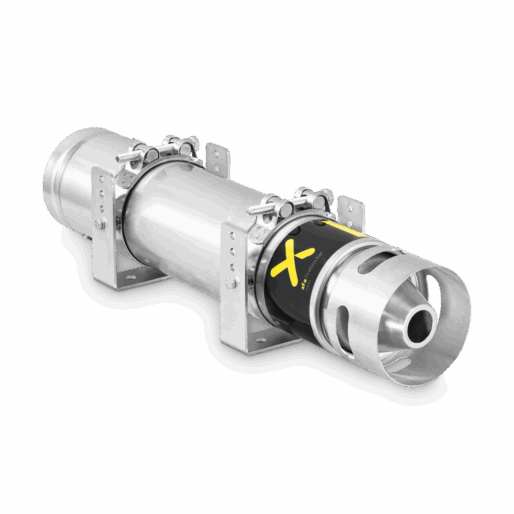
The patented AF-X aerosol of degesa fire systems is manufactured by Aerospace Propulsion Products (APP) – a subsidiary of the Ariane Group – and is regarded as the world’s leading aerosol extinguishing system in terms of quality; it has been proven to be non-toxic.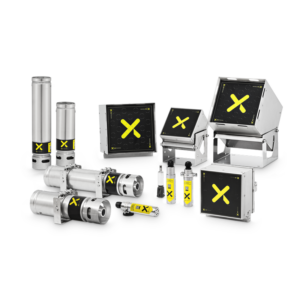
What are the advantages of aerosol extinguishing systems?
Efficiency
Aerosol fire suppression systems are by far the most efficient way to extinguish fires in terms of the ratio of extinguishing agent mass to the volume of space to be protected. Leading aerosol suppression systems require less than a tenth of the extinguishing agent volume per cubic metre of protected space compared to the most effective extinguishing gases.
Value for money
Thanks to the high efficiency of the extinguishing agent and the fact that there are no additional costs for the installation and maintenance of pipework, pressure measurement systems, etc., aerosol fire suppression systems offer excellent value for money compared to other fire suppression methods. When one considers the risk of damage to buildings and equipment posed, for example, by water-based extinguishing systems, the advantage becomes all the more significant. When properly installed and planned, aerosol extinguishing systems cause no damage to buildings or equipment!
Environmentally friendly
Aerosol fire suppression systems have no greenhouse potential and do not deplete the ozone layer. They are 100% PFAS-free.
Non-hazardous
Aerosol fire suppression systems do not displace oxygen. The leading-quality aerosol fire suppression systems are also non-toxic. Consequently, the extinguishing agent poses no immediate danger to humans. It should be noted that, upon activation, the extinguishing agent forms an opaque cloud of mist in the area, which may impede the evacuation of people. The systems are therefore designed to activate with a delay and are triggered by an evacuation alarm.
No pressure relief required
A major challenge for operators wishing to install a gas extinguishing system is often the pressure relief required for this purpose. Aerosol extinguishing systems do not build up any significant pressure in the room, which is why no pressure relief is necessary. This is a particular advantage for IT rooms and storage rooms in basements where an extinguishing system needs to be retrofitted.