What are energy storage systems?
Energy storage systems, in general, are exactly what the name suggests – systems that store energy so that it is readily available at a later time.
Energy storage systems come in a variety of designs. Some companies use hydropower systems, in which water is pumped into a reservoir. When energy is needed, the pressure of the water drives a turbine, which then generates electricity.
Hydropower systems are very costly and logistically complex. For this reason, they are usually only found in grid-scale installations, i.e. those of system-wide relevant importance.
Due to the high infrastructure costs, most companies are increasingly switching to battery storage systems.
What are battery energy storage systems?
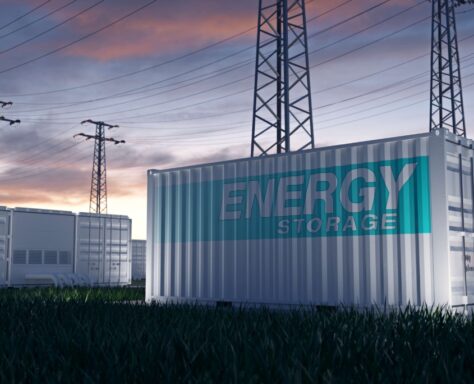
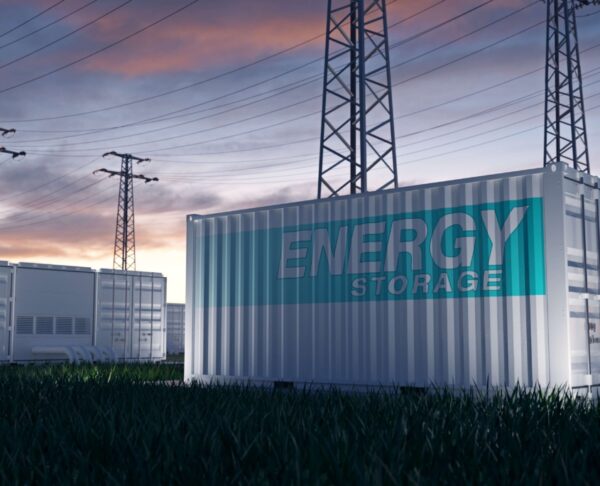
Battery energy storage systems (BESS) typically consist of large lithium-ion battery cells designed to store energy for relatively short periods. Those systems are intended to balance out periods of low energy production or high demand. Their primary function is therefore to stabilise the grid and prevent blackouts.
Battery storage systems for commercial and domestic applications represent a small – but rapidly growing – sector of energy storage systems. Lithium-ion batteries are also increasingly being used in private households and businesses that utilise renewable energy generators (e.g. solar or wind power systems).
The risks linked to lithium-ion battery storage systems
When dealing with any form of energy and its storage, there is always a certain level of risk and potential danger. With hydropower systems, there is a risk that the containment vessel could fail, causing the contained water to burst forth and flood and harm the surrounding areas.
Battery energy storage systems are designed to store a substantial amount of electricity in a small volume. Whilst this design is efficient, it creates a significant risk that must be managed. Although most BESS operate reliably and without incident thanks to modern monitoring systems, the threat of one or more cells failing must still be considered and addressed.
Fire hazard
The primary risks associated with lithium-ion BESS are damage to the battery casing or overheating of the systems due to internal faults or external factors such as exposure to fire. In the event of such a risk scenario, toxic and flammable gases may be discharged, often leading to fire and potential explosions. The responsibility for identification of such risks and for taking the necessary measures to minimise them lies with the operator of such facilities.
Sequence of events in lithium-ion battery fires
Before we look at specific risk management strategies, it is necessary to understand the failure patterns in lithium-ion battery storage systems.
Phase 1
The battery cell is compromised due to mechanical damage, internal or external thermal incidents, or electrical malfunctions.
Phase 2
Small amounts of gas, typically hydrogen, are produced and emitted along with heat. This process is known as ‘gassing’.
Phase 3
As the cell heats up, a smoke plume begins to emerge. Smoke is the clearest indicator of an imminent cell combustion and the associated process of ‘thermal runaway‘.
Phase 4
An actual fire ignites. The resulting heat will most likely cause ‘thermal runaway‘ in adjacent cells, a chain reaction potentially resulting in an explosion. In large battery installations, fires can sometimes release such large quantities of electrically conductive graphite dust from the cells, that surrounding electrical equipment may also be compromised.
Fire prevention for lithium-ion batteries
What’s the best way to contain a fire in energy storage systems?
When it comes to keeping faulty energy storage systems under control, there are two key time windows. The first is approximately 11–12 minutes before thermal runaway, when the battery is still in the degassing stage. Specialised detection systems can identify even the smallest amounts of gas, enabling a battery management system (BMS) to shut down the affected cells. The BMS monitors the battery cells and measures the temperature during the charging and discharging phases. Ventilation systems can also be activated to expel any flammable vapours from the battery storage system’s housing. This allows imminent explosions to be identified in the early stages and appropriate countermeasures to be initiated accordingly.
The second time window occurs immediately prior to the cell igniting, once flammable fumes have begun to develop. At this stage, fire suppression measures should be initiated to prevent the fire from spreading to other cells.
Fires in lithium-ion battery storage systems are particularly problematic. There are a number of reasons for this:
- Thermal runaway causes surrounding battery cells to ignite consecutively, thereby causing the fire to rapidly escalate
- The consumption of the cathodes within the cell generates oxygen itself, thereby creating one of the three basic requirements for a fire
- Thermal runaway events are highly exothermic, meaning they release more energy (heat) than was originally supplied as activation energy. The associated heat release challenges cooling-based fire extinguishing efforts
In addition, lithium-ion battery fires can involve a variety of substances that act as fuelling agents:
Fire Class A:
- Insulation
- Polymer components
Fire Class B:
- Electrolytes
- Solvents
Fire Class C:
- Hydrogen
- Oxyhydrogen gas (‘Knallgas‘)
The design of the cell inevitably results in a fire within the housing that is difficult to access.
Fire suppression and extinguishing systems for lithium-ion battery storage
Given the particular hazards associated with lithium-ion battery storage systems, specialised fire suppression systems are required. With water-based suppression systems, the extinguishing agent itself can cause electrical short circuits; furthermore, the extinguishing water inevitably causes considerable damage to the entire system. Furthermore, the high energy immediately breaks the water down into its components, which means that hydrogen is formed. In combination with oxygen, this leads to a dangerous oxyhydrogen gas mixture with an extremely high potential for ignition. In most cases, the design of the battery cells also prevents the water from actually reaching the flame. If the contaminated extinguishing water seeps into the groundwater, it causes even more damage and poses far greater risks.
Gas extinguishing systems are also problematic, as they work either by displacing oxygen or by cooling the system. However, both of these effects are produced by the burning battery cells during the fire itself.
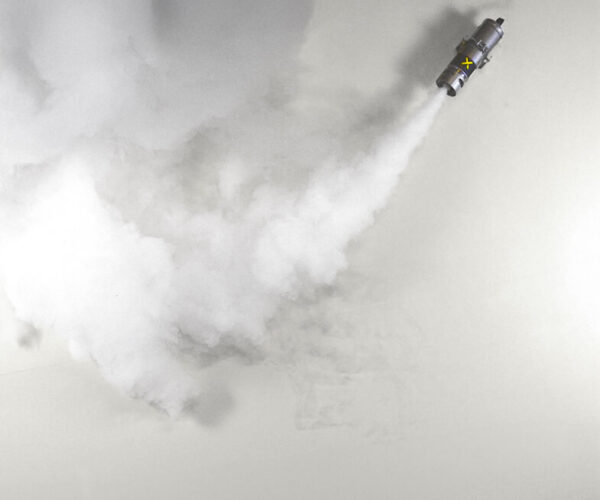
Although aerosol extinguishing systems cannot halt the chemical reaction within the battery cell, the unique characteristics of the extinguishing agent allow it to create a flame-retardant atmosphere in the room over a long period of time. This prevents the extremely hot combustive reaction of electrolyte vapours and solvents, thereby protecting the surrounding infrastructure and other battery cells.
The system is controlled for long enough to allow the chemical process within the cell to run its course and come to a complete halt.